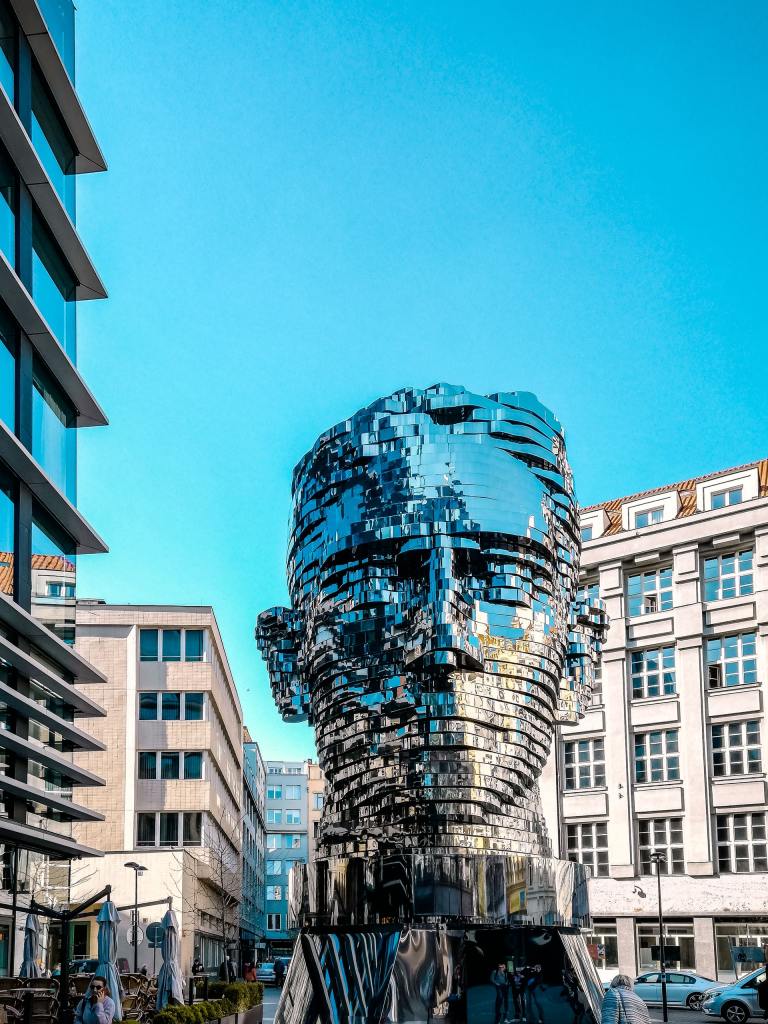
by T.W. Selvey

Those who can’t, teach. Those who don’t learn from history are doomed to repeat it. Or forget how to repeat it. Wiping memory doesn’t wipe history. I’m here to teach, because I can’t. The LAPD tech wizards have memory stick wands and the forehead on sale at Best Buy is equipped with five USBs. Is that enough? The mouse is wireless, so control is unimpeded, however. One click does the job like one savior does the saving. Before the dawn of electricity and mobile persecution pods. Before the plug was pulled. Before oxygen tubes had softly blown in the last oxygen, the last breath as a figure read Fukuyama in a convalescent bed. Before the beginning of the decade, in the first century, or in the last century or this century. The global empire named Figure trudged along, sweeping up countries into a dusty corner pile. But now, global civilization faces a dissatisfied cataclysm, which is unapologetically hungover, grouchy, and unmotivated.

Norms, democracies, wars, nation-states, and the 20th century ridicule cataclysm, the young destroyer corrupted by pubescence. It’s unprecedented. Rulers and demagogues laugh and laugh, believing their own brain stew propaganda, since private prisonsunder the aegis of global enterprise gathered all oppositional politics into a gulag. The freedom to make money is the only freedom that counts. The climate sours. The populace tastes bad, like imitation Chanel, but mobs keep getting devoured by the thousands anyway.

Criticize if you want but the wait staff are blameless. The wait staff threaten. No more water. Doilies are nicotine stained but liminal. The back burner kept the sidelined issue warm, but it’s time to starve. Destabilization complains. The Secretary of State said it’s a good time to invade us. Air strikes were called in because all the insurgents were gathered in the streets, making it easy to end the domestic dispute. The theorists celebrated the decentering. Flattering, I know. The cataclysm might breakdown in plentitude, when the crisis intended austerity, falling wages, and escape tunneling. Not going to engage the tormenter on Facebook since problems exist and intersect in me, a socially aware paradigm that’s intersecting a shitty old syntagma called ‘me’ again.

Frank talk coming from a hotdog, a hot-god, a hog rod. I was trying to say ‘rot-god’ but the censors are genetic now, but in quotes means I don’t mean it. Sex privatization became the rage and the new investment instruments were binary chromosomes, which pleased Evangelicals, eukaryotic and dualistic down to their lexical cells. A hodgepodge of greedy men yanking and touching stagnating gonads. What is the opposite of a death spiral? Welfare check on the cataclysm.

Cataclysm reemerged from hiding, and begrudgingly agreed to render society into lard and tallow. Much more useable now, and, it pays. The robots’ severance package included blood depletion and free VHS copies of Robocop, each driving a Ford in a sprawling fleet, a line of individuals engaging in solo mass production to revive the cancelled Taurus. Industrious, he became a factory, a cyborg coughing up sulfur and coal mines, usurping dioxide, cross-legged, exploiting ant and beetle labor, a stretched forearm skin canopy draped over machinic cock output. Sit down, focus, and fix the annihilation, before it withers and retreats. Since 1979, Bretton Woods has been logged and razed. The reflecting pool is a hollowing cataclysm. Take 1 cup of this year and flush it away.

Hold up for a second. Who’s ‘he,’ because I assumed briefly it was Robocop. (Robocopy.) No, but any ‘he’ will do. Move on.

The organization came up with a competing ideology based on ruining self through rapid self-preservation. DNA tablets. Tubs of de-aging, anti-wrinkle cream erased millions of faces. The earlier part of the year had a resurgence. I got my face back. A face on my lower back, a tattoo of a clock. I owe everything to time, this time. Very basic economics lesson, bitch: Capitalism does not run fast in one direction or treadmill in one place! Sidetracks and loops beset the course, which is angular, uphill or hitting the front tire on a gutter and spinning around on the back tire, the hood dented by an asteroid or an operative defenestrated from heaven or from a ghostly Twin Tower. Speed is not fast. Boredom beget orgies. Stop here and fuck. Fuck stop signs. The entanglement of the roots with the mycorrhizae is a chance to inject drugs, but they were rented. Rent to own drugs. An underground drug dungeon, the American dream. Bank of America dealt me an FHA-backed bank loan. It’s my dream. Wake me up. Tacky, kitsch morals tacked on the intensified exploitation. Slowdowns more than inconvenience the system. Glue and tar streets, alleyways, and the sidewalks, since the system will rear up and jump on dry surfaces. Since 1979, the unfettered market and greed was celebrated and individualism was heralded as rewarding, more so than collective action and union solidarity. But in fact, the right-wing ascendancy in politics turned individuals into pigs on a spit. Trunks of individuals. Turned. Tender. Obesity dripping extra-large pizza, gut fat eagerly dripping on the fire. Lowered pay to them by buckets because they were in a pit. Bragging about being a major ad recipient, getting all the best ads at maximum speed and in every dimension while you pay to work in a mental factory, bored, slow, and out of this month’s data allowance. Fast phone runs 500 apps. That’s not fast. That’s revolutionary technology, a great opportunity, cataclysm, a chance to catch us unguarded, as there is no factory reset. Feed is out of order and I don’t know what the fuck is happening today, as if today happened in this timeline, a microprocessor clock speed that is slowing at a slowing rate. The chronology adapts, accelerating backwards, backing into a repair bay, where I say it’s time to change the transmission fluid for an extortionary amount but shoving the credit card in my back pocket, actually I cut the brakes. Actually, I committed theft, caught time, a time trap, and drove off a cliff, mashing the forgetful pedal, the pedal forgetting to contact the absentee brakes, the absentminded brakes listening instead to a memory loss track set on repeat, the fire ball on the embankment, exploding me, stopped on repeat.

My thought slowly lurches from the direct clutches of substantialised conceptuality (pneuma) to more prior considerations. The chief of is the locating of what are called paranormal phenomena in a space where their paranormality is not possible, that is where they are simply a part of what is, and as such do not represent any kind of rupture.

This means considering such phenomena as ontologically prior to their being held as rupture or anomaly. This hypothetical position may be taken to be a kind of transcendental state not unlike the Laruellian one. That is, it serves as a unifying condition of possibility from which the perception of anomaly may be perceived.

Furthermore the analysis of phenomena as pneuminous accretions itself makes an overly rational analysis of the phenomena. To be fair this is what it is supposed to do i.e. supply the most reasonable explanation if one accepts the phenomena. This however ignores the primordial manifestation which cannot decide this interpretation by itself, it can only display a world inhabited by all manner of powers.

Agnostic disjunction is not even primordial, for agnostic disjunction can only occur where an ontology is being formed. It entails the choice between minimally two proto ontologies. The programme of manifestationism -the warring ontologies- must be reconsidered as a later effect. A valid later effect, but not a primordial situation.

Such considerations will hopefully, over time,  be able to yield a perspective that synthesises what later become epistemological problems (agnostic disjunction). That is, the aim is for a description that lies before such bifurcations arise.

Photo: @krisroller

I lay awake. The ceiling is landscape. Skyscape. A half century of existence. What could possibly go wrong? The President is tinkering with Iran. People are dying. We are protected by a computer screen. Until we realize it is plastic. Until we realize it is not there. No separation. Amerika gets bigger and bigger. It is no longer a country. If it ever was. It is something else.

Information. What is information? The Camaro parked on the street? The yellow sulfur streetlights? Is it a Camaro? What if it is a Mustang? I think it is a Camaro. Yes. Definitely. It is a Chevrolet. Why do I doubt myself? Am I a coward? Does anybody really care about this conversation inside my head? I am not even sure I do. Yes. Uncertainty. Everywhere. I no longer trust myself. Bergson tells us this moment is telescoped through everything we have experienced.

Is memory a peephole?

Are we looking through the wrong end?

Pinpricks of light.

.

I see you. I think. If you are. Are you? You and I keep blinking in and out of existence. What a performance. Being a person. Who says it is hard? Just be. You are what you are. Or not. This is your beating heart. Your inhales. Your exhales. 

Strike a ball.

Watch a ball hit your racket        a yellow blur.

We are waiting for memory to return. It will never return.

I am a creature of the elsewhere.

This place is temporary.

Good enough.

The chainlink fences. The scrub oaks. The dwarf pines. The endless sand and the sea.

What will happen to you? I hardly know. If you do this for money, you are doomed. Nobody reads. Not anymore. If they ever did. People need a text for survival. This is that text. A novel. 

It cannot feel like a novel. Must feel otherwise. Urgent. Emergency purpose. Not a beach book. Or perhaps a paperback at the sea is the most important book of all. Endless miles of beach sand. 

Zoë in her bathing suit. 

Waves.

I linger at the edge of memory. Fog. Mist. Under a gray sky. Every now and again I see something. What? Unsure. Lack of clarity. Opaque. Obscure.

The Volkswagen Beetles of tomorrow are hurtling through hyperspace.

You ever feel like driving a ’74 Volkswagen Super Beetle down to the Very Large Telescope in the Atacama Desert of northern Chile? I feel like that sometimes. Shift into gear. Pop the clutch.

The fallen pine trees are everywhere. The river gurgles. Earth spins. Turns. Orbits. We are passengers aboard this rocky planet. Spaceship earth.

Will they carry this book at The Strand on Broadway? Who the fuck knows? Who the fuck cares?

Are you a writer? Are you a dishwasher? Are you a sock puppet? 

Are you capable?

Can we use this book as a flotation device? Is there any yellow highlighting in this book?

Is this book really a novel? I mean, I am starting to wonder. Where are the actors?

Is this a first edition?

Signed? Get the fuck out.

I am getting hungry for a paragraph. You got anything left? Like a story. Like a fairy tale. Tell me more about the Sump Monster. That dude freaked me out. Did he really wear a brown paper bag over his head? And he just emerged from the sand dunes? Heavy. Really heavy, man. I’m trippin.

It might happen. It might not happen. Whatever is about to happen. What is the probability? What are the odds? I am not a mathematician. I am a novelist. I am a machinist. I am an artist. 

I am a hooligan.

I am a jester.

What information does your body take in? What perceptions? What observations? Sensations?

I am a fool. I get easily fooled by the foolishness.

Newspapers.

TV shows.

Radio.

What is the ultimate reality?

A memoir of Being. I should write a memoir about Being.

Fragments.

Diaries.

Notes.

The echo is uncanny. Orgasms lasting for 13.799 billion years. Spiral galaxies. Supernovae.

I miss you. You know who I miss. Remember what you said?

I forget.

What is left of what we were? We shed our electronic snakeskins. Keep moving. Keep wriggling. I am becoming something else. I have no idea what. Are you what you anticipated? Great expectations. Remember Miss Havisham? She freaked me out. Not sure if I ever recovered.

Amerika is at its best when people invent things. Nikolai Tesla. Charlie Parker. Jack Kerouac.

The government can brute-force the key space on your iPhone.

We are electronic beings.

Quantum beings.

This book is forever. Keeps getting better and better. Can you take any more?

When does a novelist surrender?

Never!

Might have to perform a spellcheck on this puppy. So many words. Ruff ruff! Bark bark!

Cats meow.

Marmots whistle.

I am in the Wilderness. The wilderness of the human imagination. Anything goes. Anything is possible. We are beginners. We are professionals. We are electromagneticbiochemical reactions.

It is so fucking cold in Space.

This apartment is toast. It is my spacemachine. Things I think here are incredible. The vastness of not knowing. Unpredictability. Beginner’s flux. Every now and again I am.

Absolutely!! she texts me. I want to bend her over a green leather sofa. It makes no sense. She is twenty. I am ?. Actually, it makes sense. I want to pull down the back of her panties. See her ripe cunt.

Men write about machines. Women write about people.

Just an observation. 

Might not even be true. 

What do I know?

Is film superior to literature? Probably. What are we doing here? Spooling from spool to spool. Reel to reel. The electronic eel of human consciousness is the Kraken.

Zig imagines the spread of his big right hand on K.’s left buttock. 

We are in Greenpoint. 

Fucking.

Everything is imagined. Even reality. Even real things.

I watch Zoë lick the glans of my penis.

My balls are getting bigger and bigger and bigger. My balls are bigger than grapefruits. 

I am at a distance. 

I get smaller and smaller and smaller.

I want to get arrested. I want to spend time in prison like Václav Havel. I want to write letters to Zoë. Is it too late? I want to be a playwright. I want to be a dissident. I want to be a defector.

Eyeballs the size of grapefruits.

The secret police are watching you.

I write a quick novel. This novel is a quickie. A detective novel. SF novel. A dimestore novel. Pulp fiction. Amazing stories. Hugo Hernsback. Philip K. Dick. Fans call themselves Dickheads.

I have no time for Amerika.

Amerika is all I know.

Thinking about writing a SF novel about a man named Razaqk. Something like Logan’s Run. Razaqk and his girlfriend Giselle running away from the secret police. In a big city in the not-so-distant future. A planet under the threat of giant methane clouds. Earth is becoming a gas giant. We are going to freeze to death. Unless we can escape. Escape pods are only for the elite. Razaqk and Giselle are adjunct lecturers of composition. Pods are not designed for part-time faculty. Nevertheless, Razaqk and Giselle make love like nobody has ever made love in the 13.799 billion years of the Cosmos. They deserve a second chance on a terrestrial planet. We all do.

Are #hashtags making us happier?

We are lying under the duvet cover. I am wearing a flannel shirt and green dungarees.

“I am taking off my pants,” she says.

“Why?” I say.

She laughs. 

Nobody can come. I am just too tired. She is just too tired. We just kept fucking. Doggie-style. Missionary. Nobody comes. Still. It is nice.

I thought you abandoned Civilization. Why are you still here? So much good TV on Netflix.

This paperback will be carried in the backpocket of every University student on the planet.

Unfinished nature of reality. That is what intrigues me. The fragments. The particles.

We are interactions.

I realize I faked it for most of my life. That is upsetting. I thought I was real. It just crept up and slapped me. Such realizations are incredibly sneaky. I sit in a chair for a long time. Run my hand through my hair. Who am I, I keep saying.

Getting colder. When it gets this cold, there is only a single goal: to remain. 

Survive.

Wait for the sun to heat up. If it ever will. Wait for it to expand.

What am I supposed to do? What if I do nothing? Is that okay? Will the Cosmos collapse? Or will I remain? What if I sit here with the engine running? Jotting my thoughts into a notebook. Making believe I am somebody else. Not simply me? Will you go on? Will you continue? Dare you? Are you not afraid? Uncertainty. Unknown. 

You are brave indeed. I envy your position. Where are you, if I may ask? Aha. Just as I thought. No need to elaborate. We understand each other.

I am getting bored watching strangers walk past me. Vehicles accelerate and decelerate. Supposedly, the planet spins and orbits and loops after the sun.

I have no concrete proof. No evidence. For any of this. We could be a film projection in an extraterrestrial theater. Perhaps a planet circling Betelgeuse.

I hear that star is going to blow. Supernova. Wait for it… 

there.

Getting colder. I should restart the engine. I turned it off. To save the planet. Now I feel cold. The vacuum of space presses in on me. Sucks me up. Into a tube. 

Wormholes fascinate me. As they fascinate you. What do you say? Let’s go for a twirl. Let’s go for a swirl.

The Internet is a disaster. Everybody knows it. We are addicted. We are bewildered. Riveted to the machine.

Snow. 

Are things a little better? 

Yes. Little bit. 

Kind of nice.

Do you suffer from Imposter Syndrome? I do. I definitely do. I do not belong here. Never did.

Anger.

Unable to capture the Kraken in my bare hands.

She is so good at it. What am I good at? I keep trying to be a person. It is so hard in Amerika. At least for me. Are you doing any better? I hope so. Somebody has to represent.

There are so many writers in Amerika.

They are writing memoirs.

Diaries.

Letters.

Fragments.

I want a totality. I want the whole fucking thing. Bring me the Kraken! And if I see Pierre fucking his half-sister in that crazy French flick Pola X one more time… I just don’t know. 

I might watch it again.

Again.

by Evan Isoline

The rosy tigers mutated under your fingernails. (This is probably my favorite photo.) Mimicry. A few of the tigers are just clones of other tigers. (Click to enlarge.) 


Of my blood-colored wheatfield when I hold out your fingernails. The sunlight is too much for your eyes and you are not alone. Your eyes will never be too much for me. A mere mite, a blighter of a blab, is what I would offer in lieu of a reckoning. We are not yet at the level of the dead and I am not a dead man. My balaclava is an emblem of the dying. Their sum is a symbol. Where is nobody? 


(Click to enlarge. Click the face of a tiger to see more detail.) Where is the one within and the one outside and its sound? The grasslands are jacinthe in your grasp, where everything is different from everywhere else, where your own little dream is brook-fed and teeming. I would tell you that everything has been done, but I would be an imp of the first rank, a reasting renaissance is what I would breed. The sound of the grass is enough. 


Your fingernails are clogged with light, baetyl stones of a new order, and the teeth of the sirens grind for art’s murder, but not yet. (Click.) The tiger’s face is an empty white mask of what is not. The sun is an example of how to perceive such things without knowing them. I am nothing if not an unidentifiable symbol. Garish as the tiger is. What somebody is beyond speculation? Your bullfighter sweat and so forth. It was a ghost thing. You leave my skin on a faraway hill, as I stammer, oh so happy, a fool in the stage light. (Click image for more detail.) 


I was familiar with two things. This place is without an architect. The second thing is that you had already made me a copy of myself. I cannot speak for the mountains I left in the desert, where my parents are watching birds with strange eyes. The way that we are not our bodies. The tigers through the holes of a ski mask make you forget about the emptiness. There are tigers in the trees. You mouth the word “fire.” Your picture is a dalliance, of the sort that has not a blush or a blench, of what might be in a way not worth seeing. (Click to expand.) 


Nobody here is waiting for the other tigers to evolve. You are already an avatar for a different you. (Click image to open in new tab.) The tigers have feathers in their mouths, but this cannot be taken as proof of a connection to the sky. You shake your head, fraught with pang, point toward the spikelets of foxtail, needlegrass and brome, you make the sign of a rectangle, in the air with a finger. We stared at the clouds that had gushed out or met amorphosed. Each omnipotence is a solitary duet between the sky and itself. (Drag the edge of the frame to adjust image size.) 


There was something familiar about the image. Medieval ghosted tigers, phantasied, decorated, captive until transferred to the new host. Do not expect them to be shunted to a pool of goo. Endosymbiotic rift, a slurp that equates them to stars running through my fingers. (What you click will tell you what you were looking at.) The image had a function outside of itself: it was a map of unconnected places. Antipodes. Not an object that is seen, but a subject that sees. I go back to the niches to repeat a bitter remorse. Grapefruit sweat and so forth. The white tiger on the right has been painted red to resemble the blood of the sun. The tiger to the left is an homage to your love. 

You make the sign of a triangle, which I see as a sail or a wing. A boat is an object in pre-phonological perception: a sight-word. So is a plane. But I know what you mean. The tigers of the droning sea, you think, they do not go near the surface. You would daftly dare to swim them up, just for a look at the sky. The white sky gralloched for the same reason you pleaded the sea to a truce, the bamboos of a broken arpeggio, also palindromes of the moon, fed your carpals with a thunder that flayed the clones of the tigers, more gaunt now, as the image becomes less a representation of the sun and more a mirror of my own rage. 


Where peonies grow wild, the grey peonies sown to your nailbeds, the linden trees and their branches, encuticled. They are so much more, like you, a monasticism, than little beasts made of clay, in the mangrove swamps you call the stage. (Click for higher definition.) Gravity-truth or allegoric. The mince of this once plucky saint all twee and frown. How you muck up, bring ruin to undue dominance, slip to surliness. I don’t like a foretaste of masks. (This picture mocks the way I associate the word “mask” with the idea of masks.) The tiger’s face as a cynical rhizomatic wombland and it’s here. My memories as a blazing cyberlag, a vandalized temple to nature. 


(Open tab incognito, click, click, click.) The heliotropes and pyroclastic borages remember why they are trounced upon, the calliope hummingbirds you call in, each had a name. Why is a word a man? You remarked apropos of an answer, and through the mask you are always oratorically nude. The image is less associated with a sound than with a silence. The image of your dream, this theatre of plenitude and the lolling moorlands where you hide, or were you entranced by a graceless glow? No, flatteries like this, be damned, treasures of hurt, such as I cannot say, as drunk as a swan on white water, this Moloch’s mastery of miniatures—a mighty insectile burden!


(Click. Click. Quite satisfied with the double-click.) The white swan in the mouth of the tiger, the tiger painted black, the two in a circle, the cloned suns I had been too afraid to touch, that are, when they were the bribe for hate, loose swarms of lineages withering, after your abracadabra, waiting at chakra-points of my blank frame, cruel biomes, where the tigers flood in. (Click the maw to open.) The antithesis of semiotics, I suppose, is your picture, skulled in the throat of the tiger, kiss, kissed, by a wide-open spigot of ants. My own implications. The lust and fear of “why?” Why is darling. 

Even in the chaos, there is a number-zombie (letter), which is called Becoming. Autoflowering. Ditto dandelion and begonia. (Click the “x” in the tab to close the window. Force quit if window won’t close.) Remove the mask. The image wasn’t rosier than the cinders leaking up in the dark. The wet-winged tiger split this misanthropic breed from its old god. All your brooms were broken. Floating in the zeitgeist. The image approaches a thaumaturgical theatre. It was the day before, and suddenly it was gone, like a dream. Sunlight on a windowsill. Sunlight in your eyes. I’m a sign, they think, shifting up, back, subvocalizing. The most kind of jaw-dropper quill. Red of acetylene. Numb threads were woven along. Their sum was arbitrary. There isn’t a number lower than infinity.

by Pseudo-Heraclitus

For that matter, nature, the nature that preceded human history, is not by any means the nature in which Feuerbach lives, it is nature which today no longer exists anywhere (except perhaps on a few Australian coral-islands of recent origin) and which, therefore, does not exist for Feuerbach.
            ― Karl Marx, The German Ideology

For Marx, pure consciousness only develops into self-consciousness, that is, consciousness proper, by means of two primary factors: the means of production, and the needs which the means of production produces in the human. Production then marks the first historical development, or the beginning of what might be called human history. That which we come to subsist on, needs, are sated at first by means of labour, the human struggle over and against nature. The most immediate of these needs (hunger, sleep, etc.) represent the needs most crucial to survival, but as the means of production advances beyond mere survival, so do our needs. The conditions of these higher, more mediated needs remain tightly correlated to the material conditions and the means by which they are produced. Consciousness may then seem, as it is understood in its opposition to nature, like a reasonable starting point for the development of the unnatural. In fact, it may even seem adequate to draw this line of the unnatural through self-consciousness and leave it at that. They may say: those who are aware of their awareness become separated, and what they have separated from is defined as nature, and as such, those who are aware must make up the class of the unnatural. This notion is incomplete however, for the means of production, the material conditions which exist as a result and correlate to the development of consciousness, remain as separated from consciousness as the nature which resisted them. This crude view of natural production is what we will call materialist dialectics – dialectical materialism suggests the opposite.

Consider dialectical materialism against materialist dialectics. Materialist dialectics suggests a dialectics of complete objects, whole and finished things that operate along a linear and determinable path. Dialectical materialism should be read in opposition to this. Dialectical materialism sees material itself as a subject of dialectical movement, matter itself is literally incomplete, it is shifting, undergoing its own contradictions and breaks. This is why Slavoj Zizek[1] talks of a dialectical materialism on the basis of an ontological incompleteness, a gap inherent to the real. This should not be read as simple correlationism, the gap isn’t contingent, it is a necessary aspect to the movement of substance itself, or as Hegel said:

The disparity which exists in consciousness between the “I” and the substance which is its object is the distinction between them, the negative in general. This can be regarded as the defect of both, though it is their soul, or that which moves them.[2]

Hegel is not as naive here as most, who would look to which side (subject or object) contained the real whole, the absolute. Instead, he posits both as defective, but follows by stating that this defective element, the gap, the negative, is their very soul. We should not see either consciousness or its object as excess, as a positive remainder, but rather a negative one; Deleuze was right when he said reality was the product of a calculating God whose tally never came out juste, his mistake was taking this remainder to be excess, rather than lack, fracture, gap. We should take this proposition as literally as it allows, the material conditions are in no sort of completed state. And there is no return now, the polymers we have conjured from the blood of the earth will never return to it in their natural state, the mines we have bored will never be replenished, so that wherever the process ends, the stamps of the unnatural will forever speak our name, even if there is no one left to hear them, signs which point inexplicably to the echos of an unnatural subject impressed upon unnatural objects. Using this logic, it seems fairer to posit that an object becomes unnatural when conscious reflection is itself stamped negatively onto it. Consciousness is not unnatural in the sense that exists outside of cosmic production, Marx’s original “nature”, a simple aspect of delineation. Again, we must resist the temptation of naive correlationism, where nature itself emerges only in the fracture between the natural and unnatural. Marx comments on the unnatural element of labour in his early work, something he deemed an “unfree, unhuman, unsocial activity, determined by private property and creating private property”[3]. The development of fractures is the product of real material processes, dialectical materialism: this fracture we refer to only refers to original “nature” by way of determinate negation, it is torn asunder by production, and what is left isn’t simply delineation, but desecration. Cosmic production itself is profaned, derailed and defiled. It is these signs which mark the slow-spreading death of cosmic production, the scars of its desecration which linger on the object as stains of the conscious reflection necessary to the means of its production. The unnatural isn’t in us, the moment we become unnatural, the universe does, retroactively. Like mycelium, the unnatural spreads, object by object, cell by cell, until the whole cosmic telos is repurposed towards whatever fruiting body the network was working to platform.

Let us take a material example: the Chauvet cave paintings (c. 32000-26000 BCE) are some of the earliest signs of divergence from the natural, but they do not yet show the reflective elements of consciousness within them, and as such lapse back into the natural. The paintings are remarkable for their vivid scenes, a strikingly realist form of art. Although they are abstractions of the real, they are abstractions which connect to lived reality, or a circuit into life. The art reveals the (commendable) realism of those peoples, but of their self-reflection, there is nothing. As is typical with cave art, there is no depiction of people[4], an oddity that becomes almost trivial when considered as a material product in the development of consciousness. It is when man leaves the cave that he leaves original nature and begins its desecration. Consider the Gobleki Tepe (c. 9700-8200 BCE). It stands as such a historical anomaly not simply because of its size, or the difficulty of construction (what is unnatural about the size or difficultly in construction from a bee to its hive or an ant to its nest?) but instead the very conscious reflection we see concretized in the architecture. The realism of earlier man is annihilated by the unnatural angles of the monoliths, the symmetrical form of the circles. We see that the unnatural isn’t simply a product unconnected to the natural, of a raw consciousness which others, rather the unnatural is the act of desecration by that raw consciousness upon that which it others itself from, that being nature, original nature, the profane other which we continually overcome and repurpose its existence towards libidinal ends. Where the realism of the art on the walls of Chauvet strike us, in Gobleki the forms of animals themselves become abstract, replete with unidentifiable creatures, including even the unthinkable for the Chauvet people, abstractions of the human itself, anthropomorphized pillars which manifest the very architecture as giants or gods, made in our own image. Gobleki Tepe is so monstrously other than the examples of architecture of the time[5] precisely because of its unnatural elements; it is the stamp of conscious reflection upon the earth, something which rightly inspires astonishment, confusion, and awe. But it does not escape the natural as a whole: consider, although its carvings show a complexity in abstraction we did not see in the simple realism of Chauvet, they point to a certain realism reflexively, as if the earliest abstractions could only be abstractions which remained signs pointing to what would be considered a ‘possible’ real. The unnatural element of the Gobleki Tepe is not in its decoration but its very material existence, it stands as a historical spore print, a place which can be seen as the radical manifestation of desecration upon the Earth. And, like mycelium, the tepe ends up buried. Who could blame those anonymous men, those who sought to bury Pandora’s box?

Marx claims the original concretization of consciousness, its practical element, lies in language, but we now have the evidence to see this is materially false. There is no writing in the Gobleki Tepe; consciousness was concretized in architecture. It can be assumed that consciousness developed language as a tool, as a means to organization, which, alongside their crude instruments, allowed for the concretization of consciousness in architecture by early (historical) humans. Quickly, a class division arises at these higher levels. The priestly class was not only concerned with the spiritual well-being of the people, as was the shamans which came before them, but instead occupying a place of protection of the temple rites. In a double movement, the King is produced as the material protector of the priestly class, who is in turn allowed the lions share of material production for his protection of the temple itself. The King develops alongside a court, the transcendent hall of the father, which itself requires the production of its own class, the nobility. As the stratification of classes widens, so does the scope and production of architecture; priests lose their supremacy to the king not in the act of the consecration of absolute power over the material conditions, but instead in the very raising of the walls of the castle over those of the temple. The towns which form around the temple, the cities around the King: the unnatural creeps from underneath and spreads absolutely. Where the unnatural subject of consciousness retains its static profanity, the unnatural object grows and destroys, combusts and constructs itself alongside consciousness as the object of its pleasure[6]. Borrowing from Burrough’s definition of language[7], we may ask the question, why is it that language develops into writing? Language, no longer seen as practical consciousness but as its tool, can now be seen to have material reality, in its most vulgar forms, across the animal kingdom; this raises the question, what was it about our particular strain of language which allowed for its mutation into the unnatural object of the written word? Here I may speculate that architecture was the material condition which created the proper environment for this mutation to develop, not as decoration, at least not at first, but as an objectification of the bonds of the tax structures by which architecture (e.g. temples, cities) were raised, that is, as a tool. As writing emerges as the unnatural mutation of practical consciousness from subject into object, it does not manifest as expression, but with the strict realism that we see adheres to the tool. Like the hammer permitted the quarry, the objective reflection of economic bonds, bonds which had beforehand existed in memory and air, now permitted the actuality of civilization[8]. Writing as a mutation was not a linear movement, but the connecting of a circuit. Spoken word retains its artistic power, but even by the time of Sumerthis artistic power was being challenged by the written word. Temples, although home to the most powerful of the spoken word, were infiltrated by the written word absolutely. We hear stories of Greek temples seemly littered with scrolls, with the most brilliant men of the time contributing to these unnatural melting-pots, these open pits of fuel awaiting the material conditions for meltdown. Perhaps we should come to understand the burning of Alexandria like we should the burying of Gobleki; once again, who could blame them? The unnatural is, in its unconditioned state, horrific. It is through conditioning that we come to see the unnatural object as banal, uninteresting. In its unconditioned state, it brings revulsion, disgust. What horrors did the steppe people see in the cities? It is said that the Mongols which came to occupy cities became tame, ineffectual[9], perhaps they were even aware that the horrors they committed were fueled upon the horror they saw reflected in the very city they razed, and that the city breeds ineffectiveness in the Mongol because horror does not last long among horrors.

            The unnatural object which conditions us today is what we can now understand as capitalism, and capitalism is the production of intelligence. Markets themselves operate on an imminent and spontaneous form of intelligence, blind, formed libidinally by commodity fetishism along the lines of various economic tendencies. The history of architecture, the tool of the hammer, the written word, today it can all be retroactively established as the stages in the production of intelligence. Furthermore, it should be recognized that intelligence, as it exists in the unnatural object, tends to be obfuscated by the fact that it most often serves to bolster our own subjective intelligence. What we call artificial intelligence is often assumed to be “weak” if it is not conscious, a product of the aspiration of human completeness (i.e. the assumption of a unification of faculties) which, if anything, artificial intelligence has totally dashed. Intelligence in the object doesn’t need sentience just because we, as intelligent beings, do. But rest assured, for all our doubt we cast on the object, we will still bring it to bear. The unnatural object had been an inert object for most of its existence, but this is no longer. It can be assumed, once again, retroactively, that automation was always a libidinal eventuality. Automation is “personalization dreamt in terms of the object” which “opens the door to a whole world of functional delusion”[10], that is, automation brings about an ideological space of integration. In other words, the personalization of automation is not proof that consciousness has been successfully implanted or impressed into the object. Instead, personalization shows that the ‘user’ can be reduced to a totally singular element, it is something which supports the illusion of personality, of a unique, and as such shows that every unique is a user to be integrated. In so far as our consciousness is concerned, it might be noted that all attempts on the front of implementation or impression have been total failures. The production of intelligence, on the other hand, has developed alongside automation in an exceedingly intimate fashion. Perhaps the conclusion of the development of consciousness does not lie at the end of history, but rather in the designation of a pre- and posthistory, and as such the beginning of posthistory is marked by the end of civilization, or the genesis of the universal subject, a communist bastardization by which the classless society of mankind at last emerges, the manifestation of a totally singular user base: that of the obsolete.


[1]Zizek’s work makes several key rearticulations of the Hegelian project which lend themselves here greatly. Consider the development of German idealism. In Kant, we find perhaps the most impressive formulation of the ontological gap, this being between noumena and phenomena. The rest of German idealism reads as an impressive attempt to use the Kantian system to overcome this gap in various ways. That is, the project of German idealism is one of unity, of a covering over of an uncovered or incomplete element in the system – to overcome the Kantian gap. The brilliance of Hegel, insofar as a Zizekian reading is concerned, is that Hegel wins this unity not by overcoming or bypassing the gap, not by filling it in, but instead by imposing this very gap as part of the imminent constitution of the absolute itself. Through this, one can not help but see Hegel’s system as incomplete, insofar as this incompleteness is the very thing that brings about ontological unity. The subject is not an outside element to actual reality, something on the other side of nature, but rather something whose ontological necessity rests upon this gap to begin with. This is also why Zizek can make his (seemingly) bizarre claim that Marx must be rematerialized reflexively by means of Hegel. To force it into terminology which may not do it justice, the gap between phenomena and noumena isn’t nothing, it is already noumenal reality itself. Overcoming the gap is not a matter of reaching for some hidden thing behind the veil, the veil and the thing are already the same object, and that object is less than nothing. It is this lens through which Zizek reads Marx. It isn’t the great materialist, but his idealist patron who claimed that the future remained outside of philosophy’s ashen hands, that the owl of Minerva only takes wing against the setting sun. Zizek takes what remains of this broken specter of Marx and puts it to the Lacanian wolves. The ontological gap isn’t simply nothing, it can be formulated, or much more accurately, problematized, in such a way as to bring its sublime contours into distinction. This ontological formulation was guised in the psychological trappings of psychoanalysis. Lacan’s infamous statement, there is no big Other, isn’t to be read as psychological nicety, it is a remark about the structure of the universe itself, both as the subject is related to and as it is composed of that universe. Reality itself is unfinished. It’s incomplete. There are fractures, gaps. It is not a gap between subject and object, but a gap inscribed into the object such that the subject was able to exist in the first place. The gap is both differential and productive. (A particular Deleuzian sympathy here: both Zizek and Deleuze insist that the phenomenal world is a product of a certain difference, a particular remainder within the universe which sets it into imbalance, but an imbalance which provides room for the subject as such. The ontological question between the two simply boils down to this, is the universal remainder positive or negative? Is it excess or is it lack? Are God’s books in the black or in the red?). Zizek has spoken of ecological emissions as a material example of this lack, an unusable surplus of waste which stands as an inescapable unnatural remainder of capital, “growing ad infinitum and thereby destabilizing the “finitude” of nature and its resources.”* This idea of surplus waste is important to the formulation, as we will see later, but for the moment we should note that movement which capital’s remainder undergoes, from nature to commodity to waste, is best characterized as a process of obsolescence, or the abolition of use value.                                                                                                
            * Slavoj Zizek, “Greening Hegel”

[2]Georg W. F. Hegel, The Phenomenology of Spirit, s. 31

[3]Karl Marx,Draft of an Article on Friedrich List’s book: Das Nationale System der Politischen Oekonomie

[4]There exists a single so-called “Venus” figure in Chauvet cave, oft speculated to be a disembodied yonic symbol, which if interpreted in this way very well may suggest the first abstraction which does in fact escape the natural, although these speculations are the same vague outlines that characterize the figure itself.

[5]That is,if it cannot be said Gobleki Tepe stands as the earliest work of architecture we have found. Other anomalies exist, all centering around this period of 10000-8000 BCE, such as the Natufian sites likeTell Qaramel andthe Tower of Jericho, or the pre-Vedic cities submerged off the Gulf of Khambhat. The coinciding flourishing in consciousness concretized along these historical lines, rather than lines of culture or religion, seem to further suggest they were products of strictly material conditions.

[6]This relation upheld between the two sides of the unnatural, the subject and the object, is the very reason why there can be no other form of capitalism than the libidinal one. It might be said, a market is only as free as the flows of desire it propagates.

[7]That being: language is a virus from outer space; see the second book in his Nova trilogy, The Ticket That Exploded.

[8]This is why we coloquially designate historywhich occurs before the mutation of writing as prehistoric.

[9]The Mongols were known to send those of them who had been in cities too long back to the steppe, where they lived off the land and their bow and were expected to return as proper Mongols.

[10]Jean Baudrillard, System of Objects; p. 121