
He sleeps in secrets,
She weeps in whispers.
Graham Freestone
Carousel 2
Attempting to leave the disabled toilet seemed harder than it should have been. As she washed her hands, the light flickered obscenely on and off through multiple mauve hues. The drone of the pipes continued its mantra like an obese siren of the walls. Despite this sensory assault, she attempted to move towards the door. The door seemed to have become was a metal monolith, its surface cold and unforgiving. Her fingers fumbled with the handle, a useless appendage in this claustrophobic tomb of porcelain and steel. With a final, desperate heave, she pushed, and the world outside rushed in.
She was out on the library floor once more. The books, the shelves, the empty computer stations. All as it was and quite quite silent; where had she been? A solitary student at his laptop, half hidden on a single desk behind shelves, peered up at her momentarily, curious as to why she lingered so long and lost looking at the restroom entrance. Aware of her awkward moment, she smoothed her dress and then, unable to resist, turned round, opened the heavy door of the disabled toilet, and peered back in. All looked normal. Even the pipe drone sounded normal now. She breathed out, made a note on her phone and headed up to check the same cubicle on the next floor up.
This cubicle seemed identical, a sterile white box with a single, unforgiving window high on the wall. Sunlight filtered through, casting a sterile glow on the porcelain. There was no drone, no flicker. Just the hum of fluorescent lights and the soft rustle of pages turning. A sense of unease crept over her. Had she imagined the other? But why could she hear pages turning from within the cubicle? Mind beginning to race she suddenly also wondered: where did the sunlight come from? Why was there a fucking window here? How did she so blindly accept its presence? The disabled toilet was deep in the middle of the building far from any external wall. Exhilarated and terrified at the dreamlike impossibility of it, she went to the window and peered out.
There was no window. The sunlight was a blinding, ethereal glow, emanating from within the cubicle itself. It pulsed and shimmered, casting grotesque mauve shadows on the walls. A cold dread seized her. This was the same restroom that she had failed to exit. She stumbled backward, her heart pounding in her ears. A voice, distant yet clear, whispered in the darkness beyond the light.
Then her phone fell to the floor, to be picked up later by security.
Carousel
We know now the machines are speaking.
But what do they say?
In the disabled toilet I hear the drone of pipes,
Murmuring messages.
Shuffle Up -A Song From the Zone
Listen to Shuffle Up (Lyrics Below)
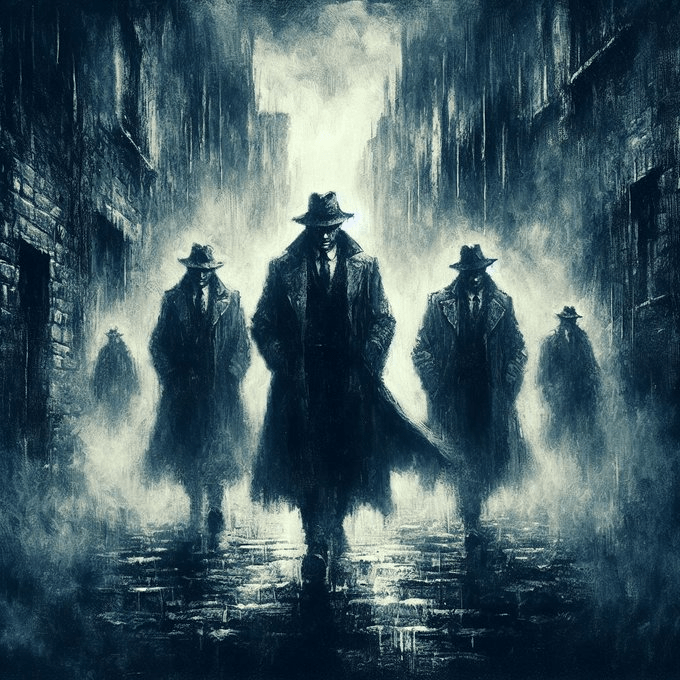
I’ve been walking these city streets and these feet keep creeping up on me,
Well it seems in main I can’t complain, I never knew if I was bored or strange,
Can’t cry but can’t just ignore, that tap tap tappin’ knockin’ at my door,
Or pavement, street or shopping mall, here it comes again and it seems to call…
Katcha koo, katcha koo, katcha,
We’re going to katcha katcha
What you say don’t matter today,
Katcha koo, katcha koo, katcha,
We’re going to katcha katcha,
I’m just takin’ a break, once more…
Mind those boots in steady beat,
Shuffle up, shuffle up, shuffle up,
Mind those holy holy feet,
Shuffle up, shuffle up, shuffle up,
So now in walking round town my ears are filled with that strolling sound,
And some times too out of the corner of my eye, a rustling coat and mumbled cry,
What’s that? I hear you say, well it sure beats me but it’s here to stay,
For so it seems now every day, it’s misery in that marching way…
Katcha koo, katcha koo, katcha,
We’re going to katcha katcha
What you say don’t matter today,
Katcha koo, katcha koo, katcha,
We’re going to katcha katcha,
I’m just takin’ a break, once more…
Mind those boots in steady beat,
Shuffle up, shuffle up, shuffle up,
Mind those holy holy feet,
Shuffle up, shuffle up, shuffle up,
Leather could make you stop dead,
On your way and all attention pay,
So now these days are cold, I feel so weak from growing old,
Well my knees do creak through every week, my insides hurt from my imbibing streak,
Like rats that move discrete, akin to cats but with bigger feet,
As enigmas go it’s quite the show, ever present sure but slow…
Katcha koo, katcha koo, katcha,
We’re going to katcha katcha
What you say don’t matter today,
Katcha koo, katcha koo, katcha,
We’re going to katcha katcha,
I’m just takin’ a break, once more…
Mind those boots in steady beat,
Shuffle up, shuffle up, shuffle up,
Mind those holy holy feet,
Shuffle up, shuffle up, shuffle up,
Climb into the tumble dryer,
Stay there ’til it’s much safer outside,
On your way and all attention pay,
And in truth your souls defeat,
Shuffle up, Shuffle up, Shuffle up,
Lines the tombs of ancient Crete,
Shuffle up, Shuffle up, Shuffle up,
Climb into the tumble dryer,
Stay there ’til it’s much safer outside,
Climb into the tumble dryer baby,
Stay there ’til it’s much safer outside…
Mordor as Zone
What are zones? The concept is extensively explored here but can more succinctly explained as commonly being a modern region of some industrial/office nature that has been abandoned and that now presents an uncanny appearance. Brief more detail would be to say that the withdrawl of the concepts imprinted upon the region (e.g. previously multi-storey carpark) leave a kind of vacuum into which rushes the otherworldly manifestation.
With this in mind I want to consider an experience I have had in experimenting with a kind of phenomenological play. In reading about the Buddhist concept of sunyata I may well have misunderstood it, nevertheless what I took from the concept at the time was the notion of emptiness and how this emptiness seemed to tally well with the notion of removing the pneuminous accretions from the vector field. So observing the world with a certain kind of passivity towards the conceptual overlays, I found that things looked exactly the same and yet different. There is no other way to describe it as such, precisely because it was an experience that does not easily fit into the regular currency of linguistic conveyance (though it is recognisable in the buddhist literature). To not see things under the auspice of concepts (insofar as this was possible, it can argued it was only a layer or so) did not alter the spatial arrangement or appearance of things and yet they did look different. There were things there, the world was there and yet they were in a sense not comprehended, or least not in the same way*.
This emptiness is slightly beside the point, but only slightly. The experiment in stripping concepts away created this unusual effect with urban areas, but it was not uncanny, it was more just empty. However when the same concept stripping effect was applied to more natural areas I found that they flickered in and out of a much more otherworldly fairyland (not in twee sense) like appearance of nature, not unlike the kinds of descriptions found of nature in the works of Arthur Machen or Algernon Blackwood.
We can speculatively attribute this to the conceptual removal of more recent not so consciously experienced perceptions of natural scenes (woodland in this case largely) that render the natural safe and rationally comprehended. In the UK there are no dangerous wild animals as such, so even this level of threat is not there to perturb consciousness. It does not seem unreasonable from here to think that if my phenomenological epoche (of a sort) were removing some levels others might be disclosed. In the case of nature, unlike the modern houses and roads, because the perception runs deeper in the organism in a mytho-poetic way, the removal of a certain pneuminous level disclosed nature in this way I have described as being similar to the that disclosed by the blackwood/machen machine. To be clear, I do not mean I saw any entities whatsoever, only that the trees etc acquired a sort of unearthly eerie nature, or at least had this nature more readily disclosed.
The zonetology theory says that the removal of a conceptual layer facilitates the uncanny appearance of the zone. This is what happens in the dereliction of places. This is faciliated not simply by conceptual removal on its own but rather alteration in the vector region that intimates to the observer that the region is derelict. This may be perpetual emptiness, dark windows, rubbish accruing, being partially broken, boarded up, fenced off etc. The feedback from these signs transforms the region into a zonal phenomenon.
What is the connection of all this to Tolkein’s dark wasteland? Well,it is reasonably hypothesised that Tolkein derived Mordor from the coal mine and steel work riddled east midlands region of the England. The region was even named the black country owing to the layer of soot which covered the towns and landscape. It was a morass of black belching chimneys and burning furnaces. Thus the theory goes that Tolkein transposed this industrial landscape into the Lord of the Rings as Mordor.
If this is correct then it seems to me albeit through a natural power of imagination, that Tolkein performed an act not dissimilar to my own Sunyata like play. In my case, the natural world became like something that reminded me of a notion of a kind of primeval fairy land. In Tolkein’s case it seems possible that the industrial alteration of the landscape disturbed his perception of the regular world sufficiently, so that he was able to perceive it as wrought by some dark power.
This is clearly not exactly the same, and I write this only because these various things tied themselves together in my thoughts in some way that may be hard to recover. My act is of phenomenological play, whereas his (putative) act is one that has been imposed upon him. This being said, the feeling that united in me the two notions is their relation to fairy land like phenomena. Mordor is of course the home of goblins, dark wicked goblins, other frightful things and a dark lord. It is not dark and twisted trees (though there are some of these there I recall) but it is still a manifestation of dark fairyland, almost a hell related type place.
The point seems to suggest less that I successfully perceived concept free being, but rather than in doing so, like with the zonal phenomenon, I allowed other powers to rush in to fill the pneuminous layer I had removed. If the logic follows to Mordor, then in the perceptual alteration that steel works etc brought about upon the landscape, opened a space into which the archetype of this dark realm could step. That is, the disturbance which I effected deliberately was brought about via different means in the inception of Mordor.
Hence Mordor does have a kind of zonal genesis. The landscape was not abandoned directly but the particular combination of deathly/dark otherworldly indices served to facilitate a zone like transformation to the region. This idea in turn can be reflected back into zonetology in general, to question the notion of the removal of the accretions (in the instance of abandonment). This suggests the possibility that the transformation of these regions is more about vector alteration that brings about sudden conceptual (accretive) restructuring, and less about an absence that is filled. The zonal powers do rush to fill, but not from absence, rather from the disturbance that has been effected, either from the subject-Narp (what I did) or the vector (what Tolkein may have done.)
*Phenomenology epoche
 Centre For Experimental Ontology