‘Well!’ says the lad ‘That’s a strange sight if ever I saw one! And now what have I but a tale of a troll and a silver penny. If things hold as they are then sure as the gods are real, I’m not done with oddness yet!’ And with this remark he strode out of the library and went back to the singular fen road that led him away.
The lad walked on, the day grew short. The village was long behind him but the fen seemed so, so vast. As twilight blue settled about him and the air grew more chill, the lad wondered what he would do for the night. At length he walked by an old tree stump, so wide it stuck obtrusively out of the hedgerow. In the fading indigo he could see a crow perched on the top of the stump, just above the line of whitethorn.
‘Whither away lad?’ says the crow. The lad looked up, and though alarmed, thought he’d best mind his manners, especially with the time of day and the nature of the speaker. ‘Good evening sir, I’ve left my village for a better life just this very day, though I’m sure I shant’ find it today. I’ve food enough to keep me going, but where to sleep tonight, now there’s an issue? Like as not I’ll carry on along the road and see if there’s a small house where I might grab a night’s lodging.’
The crow peered at him with a curious angle of its head and spoke again ‘There’s no house down the road you’ll reach tonight lad and like as not the folk round here wouldn’t have you either. Yet I may be able to help you. This old stump is hollow inside keeps the cold and wind fair away. The inside is soft where the wood has rotted but slightly and would make a fair place for you to sleep. Creep through the whitethorn here and you’ll find a hole that leads into the stump. Squeeze in and rest yourself. The mushrooms emit a dim light so you’ll see clear enough in there if you need to.’
The lad looked at the dusk, he looked at the road, so long, straight and forbidding. He looked at the crow and underside of the dark hedgerow and thought, ‘in for a penny’ —and in doing so thought about the silver penny you may be sure. ‘Thanks sir Crow, I’m much obliged.’ says the lad. ‘I’ll have a bite and crawl in for the night. Would you care to join me, for I’ve meat, cheese and bread a plenty!’ ‘You’re a kind lad, and I’ll accept your gift, but only the meat and cheese I’ll take as the grains sore disagree with me.’
So the crow and the lad sat on the verge and ate from the bag of food until they were full. Then the crow cawed farewell and the lad crawled under the hedge to find the tree stump entrance. And wasn’t it dark in under that hedge and were the smells of the earth and hedge so full. Still he crawled and crawled until he found the stump; the stump but no entrance. He felt the stump and thought of the blind man, for sure as anything the blind man and he were just the same right now. Round the stump he made his way, feeling with his hands the rough surface, hoping to find this aperture through which he might enter, hoping the crow right now was not laughing to his wife about trick he had played and the feast he had gained.
The lad was tired, the lad was almost in a panic, for it seemed to him he had followed the base of the stump round for a long time now and that surely, if not already, he must have circumnavigated it in its entirety. This despair was fair upon him in total and he was about resolved to lie in the earth under hedge, when what should he spy but a faint glow. At first he could not tell if it were but one of those strange glows that emit from the depths of darkness as if by themselves, but then he saw it was no phantasm of light but a steady, faint orange glow that came from somewhere further round the stump. The lad scrambled on towards it, ignoring the enormity of time it seemed to take get round to it on a single, albeit large tree stump.
At last he gained a fuller sight of it and saw it was indeed a hole that lead into the stump. The warm welcoming orange glow shone softly from it. The hole was tight, but not too tight and he squeezed in with little difficulty.
Once inside what did he see? Oh oh oh! So strange a place as he had never cast his eyes upon, a small cave of soft spongey wood, the walls of which were covered with a great many mushrooms of all sizes. From this fungus came the glow, though in a sense it was hard to see how, for in a way it appeared as if the mushrooms were illuminated by the glow, yet they were also its source.
Though the place was a marvel, the lad was tired and tired as he was he lay himself out on the spongey floor and was soon fast asleep.
Attempting to leave the disabled toilet seemed harder than it should have been. As she washed her hands, the light flickered obscenely on and off through multiple mauve hues. The drone of the pipes continued its mantra like an obese siren of the walls. Despite this sensory assault, she attempted to move towards the door. The door seemed to have become was a metal monolith, its surface cold and unforgiving. Her fingers fumbled with the handle, a useless appendage in this claustrophobic tomb of porcelain and steel. With a final, desperate heave, she pushed, and the world outside rushed in.
She was out on the library floor once more. The books, the shelves, the empty computer stations. All as it was and quite quite silent; where had she been? A solitary student at his laptop, half hidden on a single desk behind shelves, peered up at her momentarily, curious as to why she lingered so long and lost looking at the restroom entrance. Aware of her awkward moment, she smoothed her dress and then, unable to resist, turned round, opened the heavy door of the disabled toilet, and peered back in. All looked normal. Even the pipe drone sounded normal now. She breathed out, made a note on her phone and headed up to check the same cubicle on the next floor up.
This cubicle seemed identical, a sterile white box with a single, unforgiving window high on the wall. Sunlight filtered through, casting a sterile glow on the porcelain. There was no drone, no flicker. Just the hum of fluorescent lights and the soft rustle of pages turning. A sense of unease crept over her. Had she imagined the other? But why could she hear pages turning from within the cubicle? Mind beginning to race she suddenly also wondered: where did the sunlight come from? Why was there a fucking window here? How did she so blindly accept its presence? The disabled toilet was deep in the middle of the building far from any external wall. Exhilarated and terrified at the dreamlike impossibility of it, she went to the window and peered out.
There was no window. The sunlight was a blinding, ethereal glow, emanating from within the cubicle itself. It pulsed and shimmered, casting grotesque mauve shadows on the walls. A cold dread seized her. This was the same restroom that she had failed to exit. She stumbled backward, her heart pounding in her ears. A voice, distant yet clear, whispered in the darkness beyond the light.
Then her phone fell to the floor, to be picked up later by security.
I’ve been walking these city streets and these feet keep creeping up on me, Well it seems in main I can’t complain, I never knew if I was bored or strange, Can’t cry but can’t just ignore, that tap tap tappin’ knockin’ at my door, Or pavement, street or shopping mall, here it comes again and it seems to call…
Katcha koo, katcha koo, katcha, We’re going to katcha katcha What you say don’t matter today, Katcha koo, katcha koo, katcha, We’re going to katcha katcha, I’m just takin’ a break, once more…
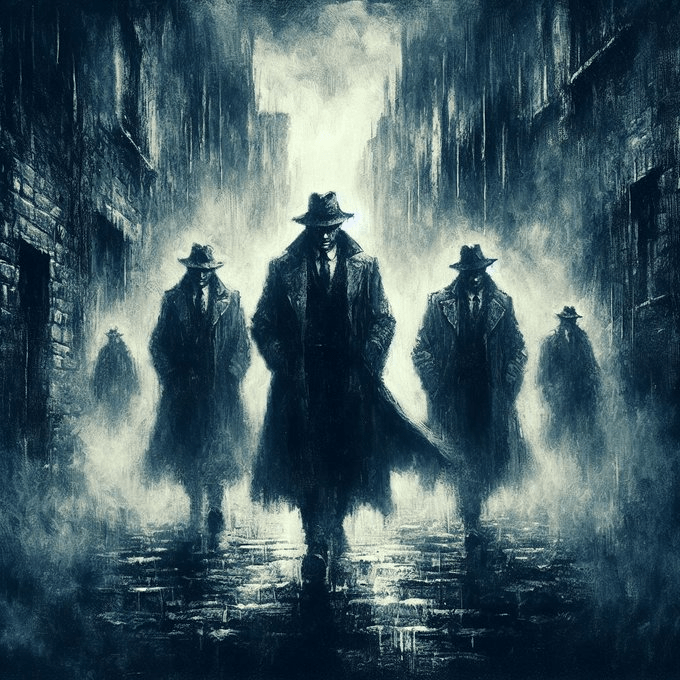
Mind those boots in steady beat, Shuffle up, shuffle up, shuffle up, Mind those holy holy feet, Shuffle up, shuffle up, shuffle up,
So now in walking round town my ears are filled with that strolling sound, And some times too out of the corner of my eye, a rustling coat and mumbled cry, What’s that? I hear you say, well it sure beats me but it’s here to stay, For so it seems now every day, it’s misery in that marching way…
Katcha koo, katcha koo, katcha, We’re going to katcha katcha What you say don’t matter today, Katcha koo, katcha koo, katcha, We’re going to katcha katcha, I’m just takin’ a break, once more…
Mind those boots in steady beat, Shuffle up, shuffle up, shuffle up, Mind those holy holy feet, Shuffle up, shuffle up, shuffle up, Leather could make you stop dead, On your way and all attention pay,
So now these days are cold, I feel so weak from growing old, Well my knees do creak through every week, my insides hurt from my imbibing streak, Like rats that move discrete, akin to cats but with bigger feet, As enigmas go it’s quite the show, ever present sure but slow…
Katcha koo, katcha koo, katcha, We’re going to katcha katcha What you say don’t matter today, Katcha koo, katcha koo, katcha, We’re going to katcha katcha, I’m just takin’ a break, once more…
Mind those boots in steady beat, Shuffle up, shuffle up, shuffle up, Mind those holy holy feet, Shuffle up, shuffle up, shuffle up, Climb into the tumble dryer, Stay there ’til it’s much safer outside, On your way and all attention pay,
And in truth your souls defeat, Shuffle up, Shuffle up, Shuffle up, Lines the tombs of ancient Crete, Shuffle up, Shuffle up, Shuffle up, Climb into the tumble dryer, Stay there ’til it’s much safer outside, Climb into the tumble dryer baby, Stay there ’til it’s much safer outside…

 Centre For Experimental Ontology